
Charlotte, NC & the surrounding metro
Water Heater Installation in Charlotte, NC
New construction, a relocated unit, or a first-time gas, tankless, or hybrid setup. Installed price ranges with the permit, venting, and code work handled.
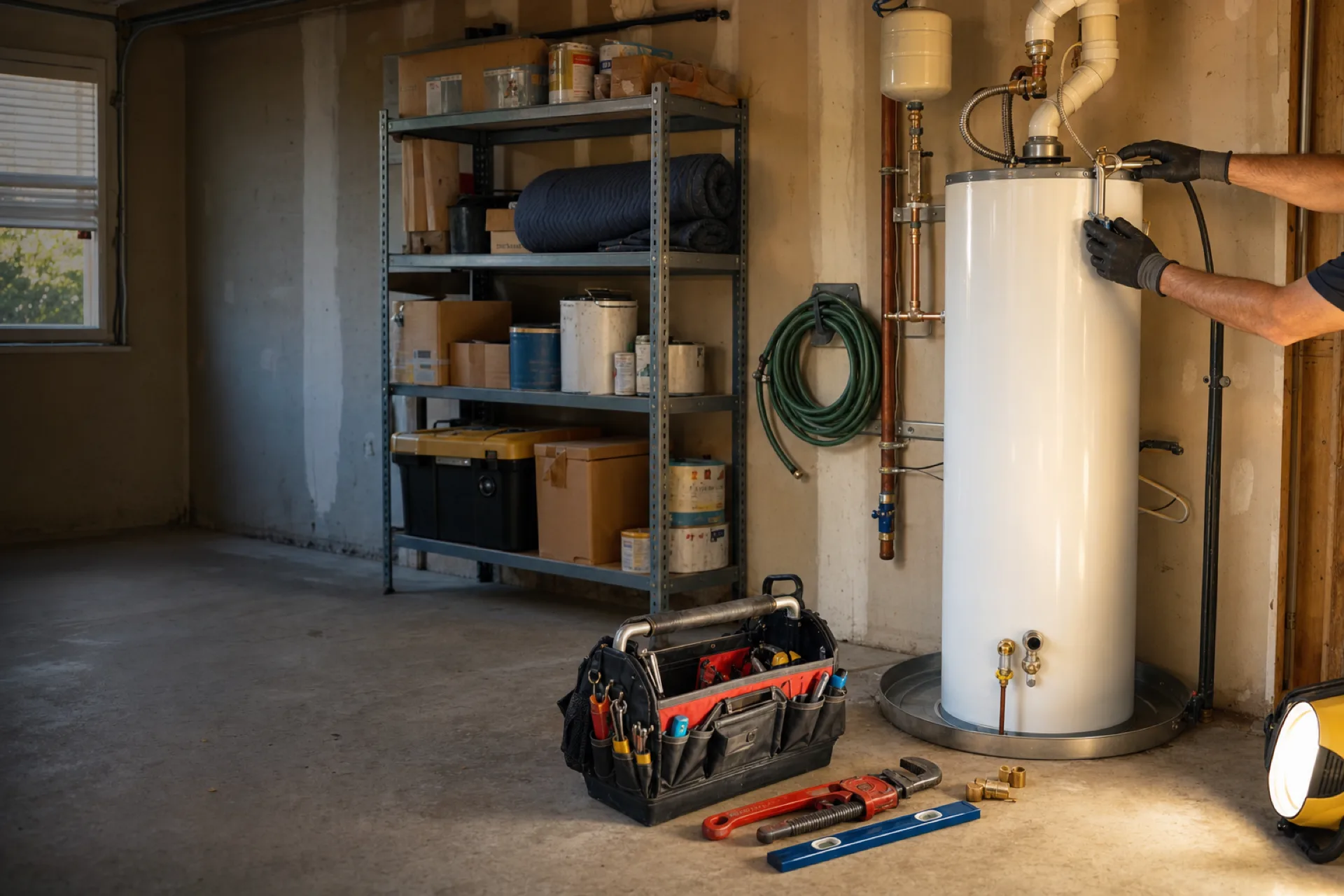
$1,400–$2,200 40–50 gal tank, installed · See your range →Water heater installation in Charlotte covers a unit going in for the first time, a heater moved to a new spot, or a switch to gas, tankless, or hybrid. A new or relocated install is permitted, inspected work, and the permit and code items are in the quoted price.
A first-time tank starts around $1,400–$1,900 installed for a 40-gallon gas unit. Adding a gas line, new venting, or a dedicated circuit moves it up, and each of those is priced before the work starts.
What a new water heater installation costs in Charlotte
| Tank size | Gas | Electric |
|---|---|---|
| 40 gallon 2–3 people | $1,400–$1,900 | $1,250–$1,650 |
| 50 gallon 3–4 people | $1,600–$2,200 | $1,400–$1,850 |
| 75 gallon 5 or more people | $2,400–$3,200 | $2,000–$2,600 |
A first-time or relocated tank install in a garage, basement, or closet. Includes the unit, labor, standard code items, and the permit. Prices are before NC sales tax.
| Tankless and hybrid | Installed |
|---|---|
| Tankless, first-time or conversion Adds new venting and often a larger gas line | $3,000–$5,000 |
| Hybrid (heat-pump) tank Needs airflow and a 240V circuit | $2,500–$4,200 |
What does a code-compliant installation include?
- The Mecklenburg County permit and inspection
- The new unit set, leveled, and connected
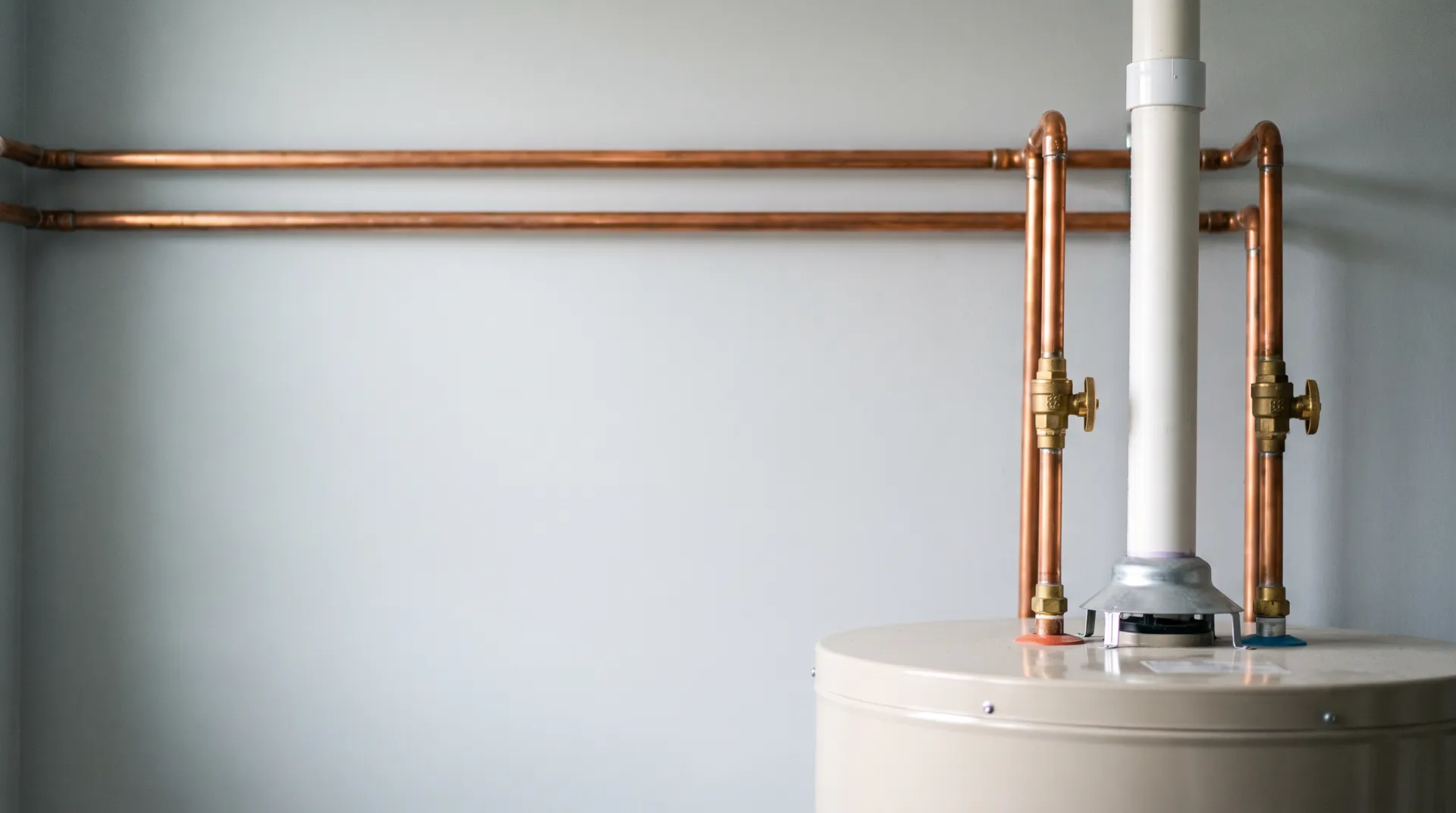
- Gas line, vent, and combustion air on gas units; a 240V circuit on electric or hybrid units
- New T&P relief valve and discharge line
- Expansion tank where a pressure-reducing valve or backflow preventer makes it a closed system
- Drip pan and drain where the unit sits in an attic or above living space
- Sediment trap and shutoff valve on gas units
- Condensate drain on a hybrid or condensing tankless unit
- Haul-away of the old unit when one is being replaced
- A fill-and-test: every joint checked, hot water verified at the tap
New installation or replacement?
If your heater sits in a working spot and you are swapping it for the same type, that is a replacement, and the numbers are on the water heater replacement cost in Charlotte page.
Installation is the right word for a unit in new construction or an addition, a heater moved to a new location, or a first-time gas, tankless, or hybrid setup. Those add venting, a gas line, or a circuit, and they are permitted and inspected.
How a new install works, step by step
A first-time or relocated install is more than setting a tank. We confirm the right unit and size for the home, then the plumber handles the permit, the connections, and the code work, and the county inspects it.
- Confirm the type, fuel, and size for your household and hot-water use.
- Pull the Mecklenburg County permit, or the permit for your town.
- Run or extend what the unit needs: the gas line and venting, or a 240V circuit.
- Set, level, and connect the unit with a new T&P valve and shutoff.
- Add the code items: an expansion tank on a closed system, a drip pan where required, a condensate drain on a hybrid or condensing unit.
- Fill, test every joint, verify hot water at the tap, and schedule the inspection.
What we install: gas, electric, tankless, and hybrid
A first-time install is the moment to pick the right type, since the venting and connections go in fresh either way.
- Gas tank. Fast recovery for a busy household where Piedmont Natural Gas serves the home. It needs venting and combustion air.
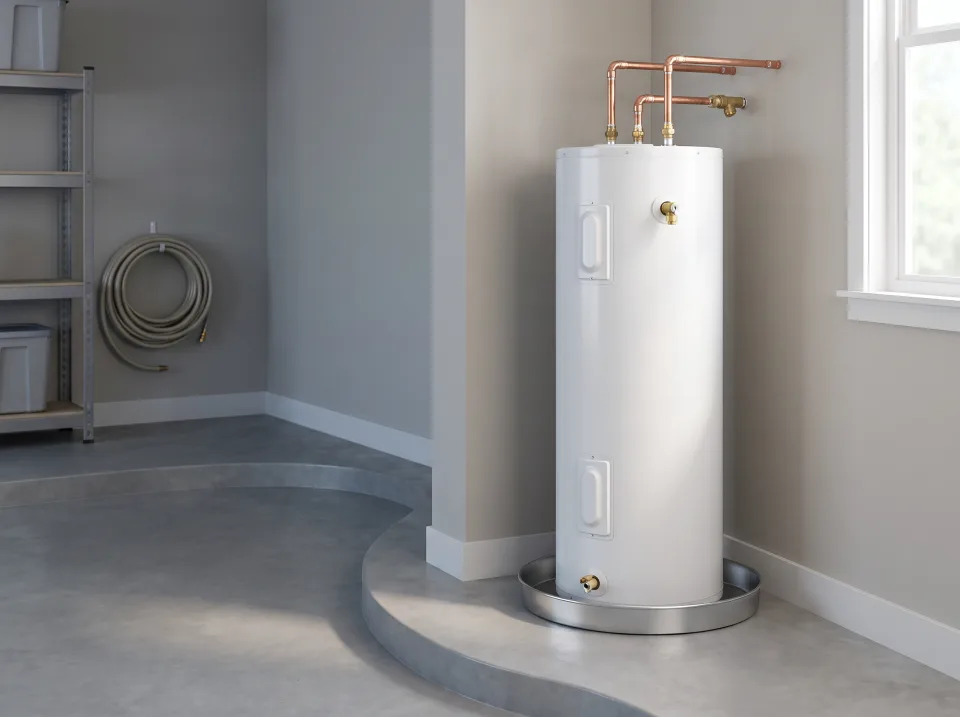
- Electric tank. The simplest install where there is no gas service: a circuit, the water lines, and a few hours.
- Tankless. Endless hot water and a longer service life, with new venting and often a larger gas line.
- Hybrid (heat-pump). The cheapest to run, with a Duke Energy rebate on a qualifying unit. It needs an open, above-freezing space, covered in the heat-pump water heater guide.
How long a new unit lasts
A storage tank lasts about 8 to 12 years and a tankless unit about 20. A yearly flush clears the sediment that shortens a tank's life, and Charlotte's soft water means scale builds slowly here. The flushing guide walks through it.
What changes the price of an install
A straight tank install in an easy spot sits at the low end. A handful of things move it up, and each is priced before the work starts:
- A new or upsized gas line, common on a first-time gas or tankless unit.
- New venting, or a power-vent unit where an atmospheric vent will not work.
- A dedicated 240V circuit for an electric or hybrid unit where none exists.
- An attic or upstairs location, for the access and carry-out labor.
- Code items a closed system needs, like an expansion tank or a drip pan.
Signs it's time for a new water heater
If you are replacing a unit rather than adding one, a few signs say do it now rather than after a flood: rusty hot water, popping from the tank, water pooling at the base, or a heater past 10 to 12 years. A leak from the tank body is not a repair, since that tank has failed.
The signs a water heater is failing guide covers each one and how to tell repair from replace.
Brands we install
The plumber installs the major residential brands: Rheem, Bradford White, A.O. Smith, and State for tanks, and Rinnai, Navien, and Noritz for tankless. If you have a brand preference, say so with your quote. If not, you get a solid mid-tier unit matched to your home.
Water heater terms worth knowing
- First hour rating (FHR). The gallons of hot water a tank delivers in its busiest hour. It is the real sizing number, more than raw gallons.
- Uniform energy factor (UEF). How efficiently a unit turns energy into hot water. Higher is better.
- T&P valve. The temperature and pressure relief valve, a safety device required on every tank.
- Anode rod. A sacrificial metal rod that corrodes so the steel tank does not. Replacing it extends the tank's life.
- Expansion tank. A small tank that absorbs pressure as water heats, required on a closed system.
Why work with us
We are an information and quote service for water heater work in Charlotte, so you get an upfront installed range before anyone comes out, and every job is performed by a licensed, insured plumber. The permit and code items are in the quote, and there are no add-ons you did not ask for.
Where we install across the Charlotte metro
Installations run across Charlotte and the surrounding towns: Concord, Huntersville, Matthews, Mooresville, Gastonia, and the rest of the metro. Same-week scheduling in most areas.
Get an upfront installation quote
Same-week service across the Charlotte metro
FAQ
Water heater installation questions, answered
What Charlotte homeowners ask before a new, relocated, or first-time water heater goes in.
Do I need a permit for a new water heater installation in Charlotte?
Yes. A new, relocated, or first-time install is permitted work, unlike a like-for-like swap. The plumber pulls the Mecklenburg County permit and the job is inspected. The permit is part of the quote.
How long does a water heater installation take?
A straightforward tank install is a few hours. A first-time gas or tankless setup that needs a gas line, venting, or a new circuit takes longer, sometimes most of a day. You get the timeline with the quote.
Can a gas water heater go where there was an electric one?
Yes. It needs a gas line, venting, and combustion air, so it is a bigger job than a same-type swap and it is permitted. The gas and vent work is priced before anything starts.
Where can a water heater be installed?
A garage, basement, utility room, or an approved closet. A gas unit in a garage sits with its ignition source 18 inches up unless it is a flammable-vapor-ignition-resistant model, and it is protected from vehicles. An attic or above-living-space location needs a drip pan and drain.
Do you install tankless and hybrid units for the first time?
Yes. A first-time tankless needs new venting and often a larger gas line or a dedicated circuit. A hybrid needs a space with airflow, a condensate drain, and a 240V circuit. Both are quoted with those items spelled out.
What size water heater should a new install be?
A 40-gallon tank suits 2 to 3 people, a 50-gallon 3 to 4, and a 75-gallon or a tankless unit a larger home. The plumber confirms the right size for your home and hot-water use before quoting.
Related pages
Water heater guides
Do you need a permit for a water heater?
The like-for-like exemption, when a permit is required, and how it works county by county.
5 min read Read the guide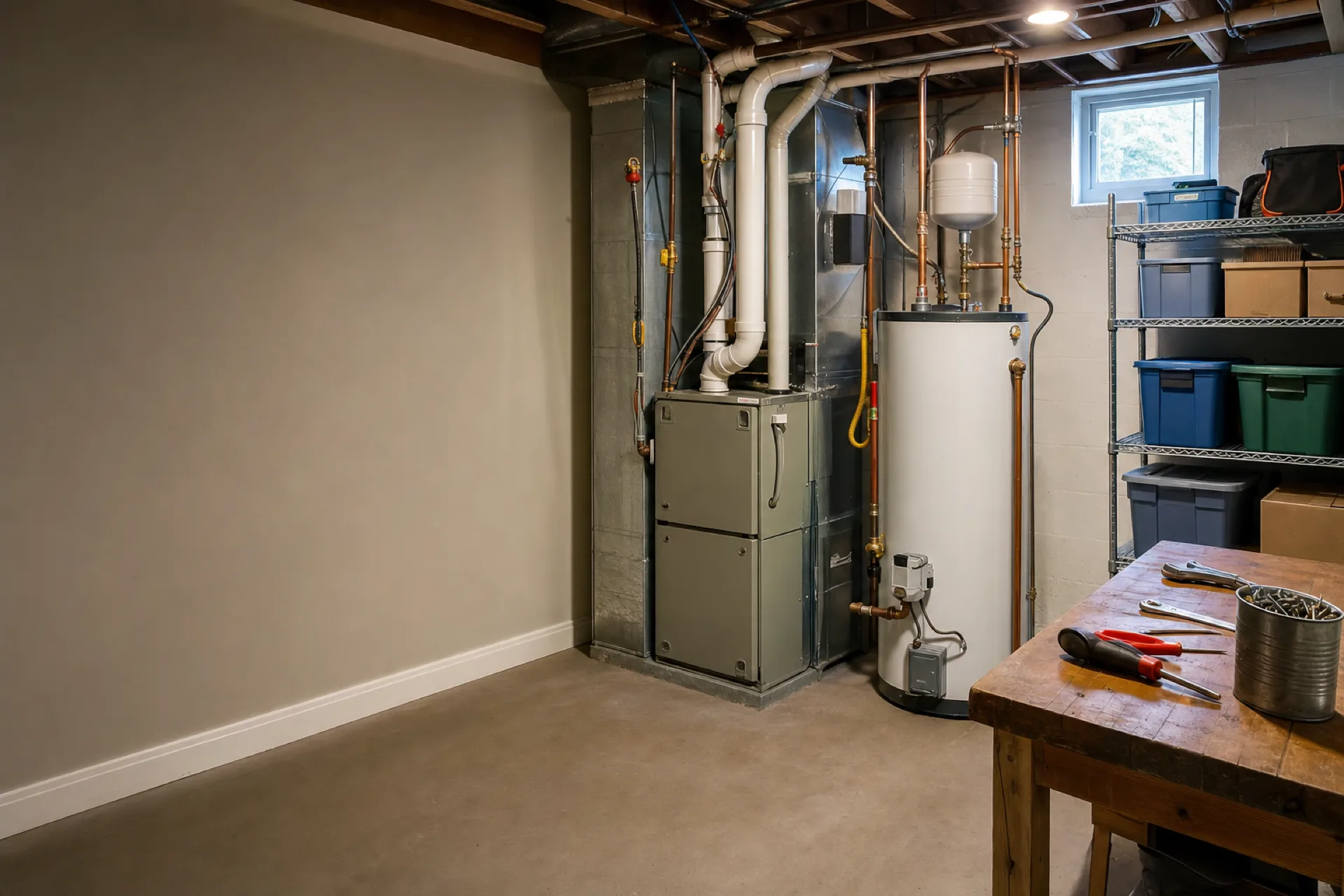
What size water heater do I need?
Tank gallons by household, why first hour rating beats raw size, and how to size a tankless unit.
6 min read Read the guide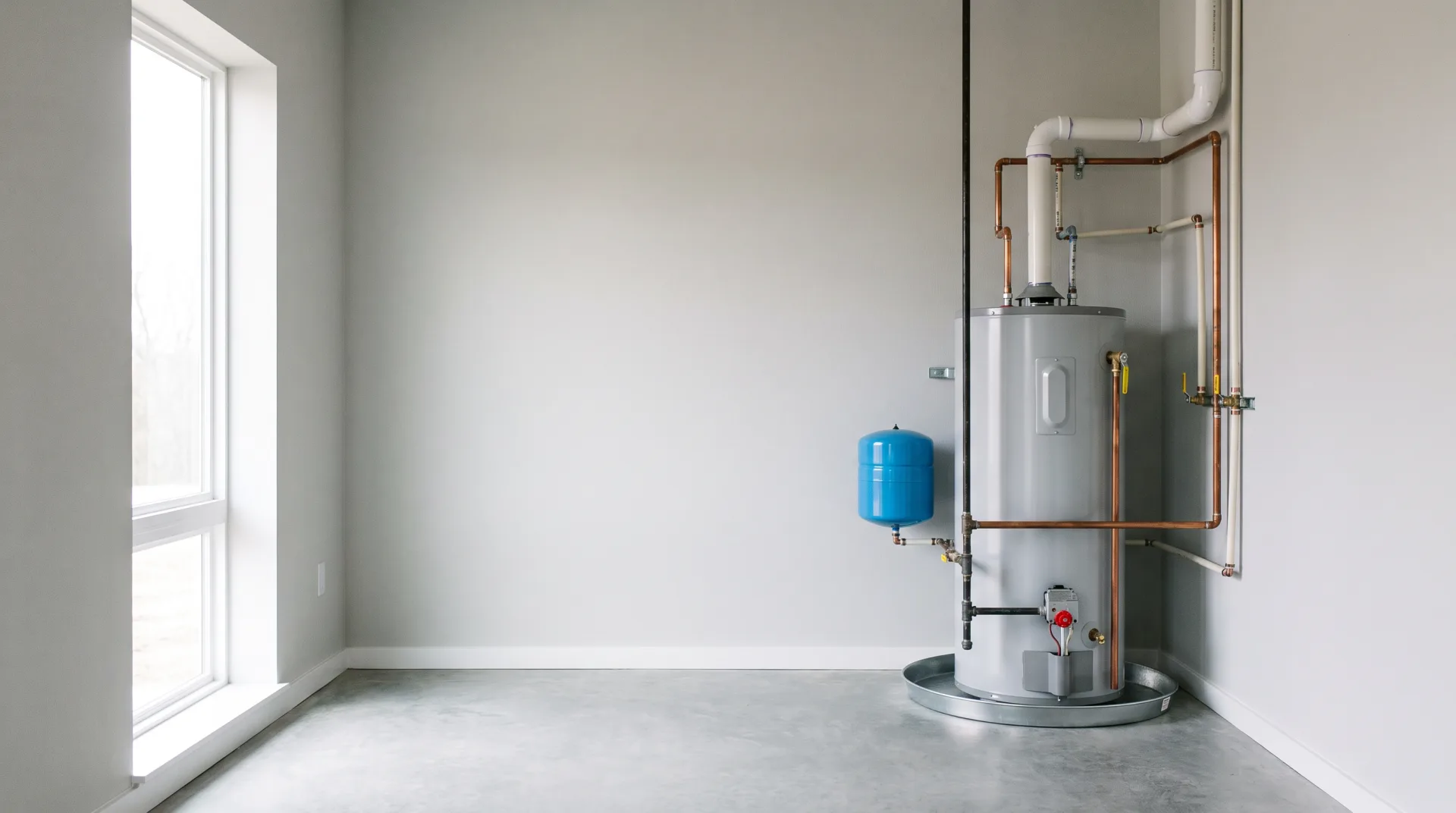
Gas vs. electric: which is cheaper?
Install cost, running cost with Duke and Piedmont in the picture, lifespan, and why a heat pump can beat both.
6 min read Read the guide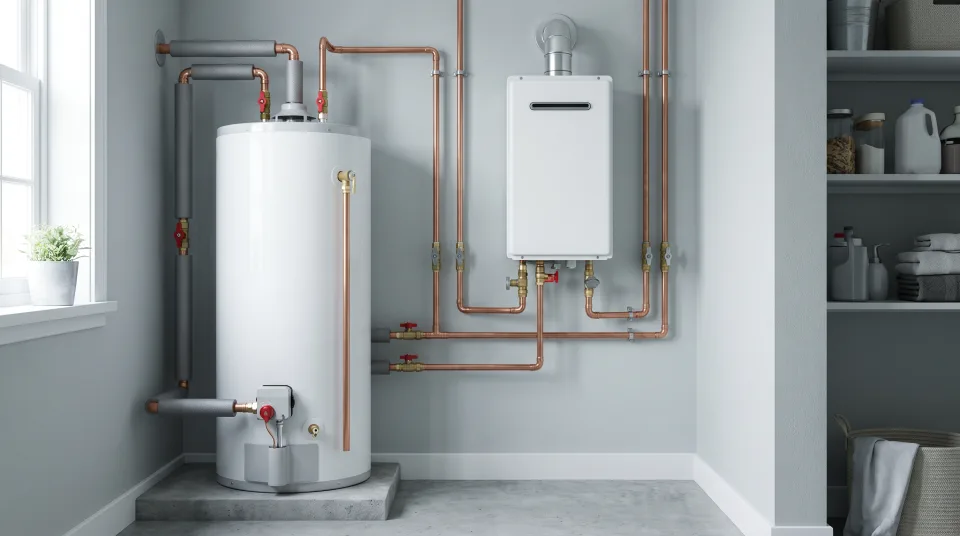
Tank vs. tankless: which is worth it
The payback math for a Charlotte home: upfront cost, the gas-line reality, and when tankless pencils out.
7 min read Read the guideReady to schedule an installation?
Same-week service across the Charlotte metro