
Water heater guide · Charlotte, NC
Water Heater Leaking? What to Do
Where the water is coming from decides everything: a valve or a fitting is often a quick fix, but a leak from the tank itself is a replacement. Here is how to tell, and what to do right now.
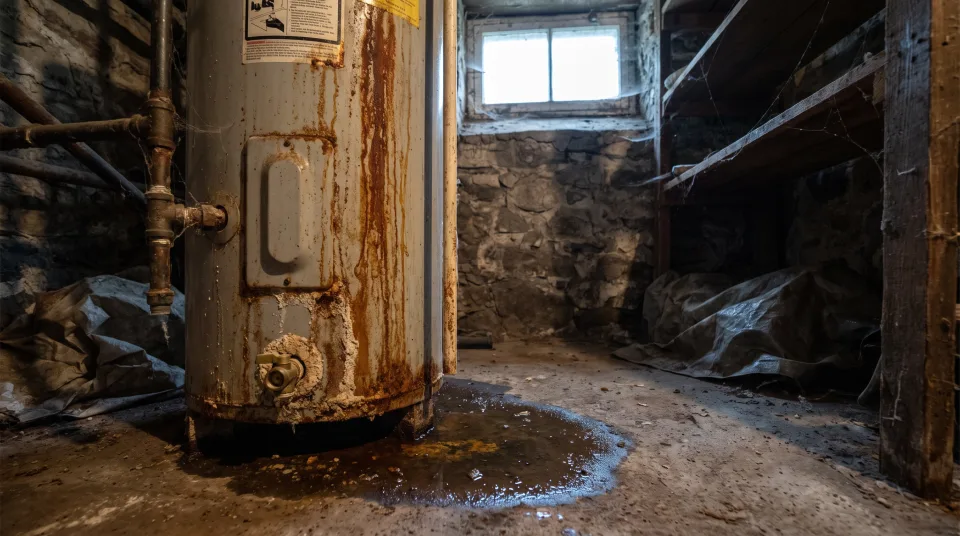
A leaking water heater is not always a replacement. Where the water comes from decides it: a drip at a valve, a fitting, or the drain is often a repair, while water seeping from the tank body means the tank has failed. Before anything else, shut off the water and the power or gas.
Leaking right now? Do this first
- Shut off the cold-water valve at the top of the tank, or your home's main shutoff.
- Kill the power at the breaker on an electric unit, or turn the gas dial to off on a gas one.
- Open a hot-water faucet to relieve pressure in the tank.
- Then call, and send a photo of the unit and where the water is. You will get a straight range.
Where is the water heater leaking from?
Four spots account for almost every leak, and they split cleanly into fix and replace:
- The T&P relief valve. A drip here is usually a pressure or temperature issue, or a worn valve. Repairable.
- The drain valve. The spigot near the base can seep or fail to seat. Repairable.
- Inlet and outlet connections. The pipe fittings on top can loosen or corrode at the joint. Repairable.
- The tank body. Water from the tank itself, pooling underneath, means it has rusted through. That is a replacement.
The water heater repair in Charlotte page covers the repair-versus-replace rule in full, including the age and cost tests that decide a close call.
A dripping T&P valve
The temperature and pressure relief valve is a safety device. It opens to release water when pressure or temperature inside the tank climbs too high, so a drip can mean the system is over pressure, the thermostat is set too hot, or the valve has simply worn out.
One rule matters here: never cap, plug, or valve off the discharge line. That line has to stay open so the valve can do its job, and North Carolina's plumbing code requires it to run unobstructed to within six inches of the floor. If the valve keeps discharging, that is a call, not a plug.
Is it actually a leak, or condensation?
Not every puddle is a leak. A tank can sweat when cold incoming water chills its outer surface, which shows up most on a brand-new tank, right after a large draw refills it with cold water, or on a humid Charlotte afternoon. If the moisture dries as the tank heats back up and does not come back, it was condensation, not a failure.
Not sure if it is a valve or the tank? Send a photo and get a straight answer.
Or give us a call for a quote: (704) 842-9891
Repair or replace?
A valve, a fitting, or a drain is usually a repair, and worth doing on a tank that still has years left. A leak from the tank body is the end of the line for that unit, and on a heater past 10 to 12 years even a repairable leak is often the moment to replace on your own schedule. The replacement cost in Charlotte page has the installed ranges if that is the way it goes.
FAQ
Water heater leaks, answered
What Charlotte homeowners ask when they find water at the tank.
Is a leaking water heater an emergency?
Treat it as one until you know the source. Shut off the water to the tank and the power or gas, then call. A drip at a valve or fitting is often a straightforward repair, but water from the tank body means the tank has failed and can flood.
Can a leaking water heater be repaired?
It depends where the water is coming from. A leak at the T&P valve, the drain valve, or a pipe connection can usually be repaired. A leak from the tank body itself cannot. That tank has corroded through and needs replacing.
Why is water dripping from my T&P valve?
The temperature and pressure relief valve is a safety device that opens when pressure or temperature climbs too high, so a drip can mean the system is over pressure, the water is too hot, or the valve itself is worn. Never cap or plug the discharge line. That line has to stay open.
Could it be condensation instead of a leak?
Sometimes, yes. A tank can sweat when cold incoming water chills the outside, especially on a new tank, after a big draw that refills it, or on a humid day. If the water dries up as the tank heats and does not return, it was likely condensation.
Related pages and guides
Water heater leaking? Get a call back with a quote
Same-week service across the Charlotte metro